






CBDCs have turned into one of the most discussed concepts in the international finance. The question that governments and central banks are posing is whether electronic money issued by the central bank can transform how individuals make payments, save and transact. It is claimed that CBDCs are the next evolutionary stage of paper money, and some are concerned whether people are prepared, or not. It is not simply a matter of technology but also about trust, privacy and the way people use money in their daily life.
What Are CBDCs and How Do They Work?
CBDCs are electronic versions of the currency of a nation, which is issued and regulated by the central bank. As an example, the U.S Federal Reserve would issue a digital dollar and the State Bank of Pakistan a digital rupee. CBDCs, unlike other cryptocurrencies like Bitcoin, are fully supported by the government and even their value is identical to paper money.
The concept is straightforward, ensure that money has become safer, faster and easier to transfer among individuals and businesses without the necessity of a personal bank or card network. The International Monetary Fund (IMF) reports that over 130 countries, representing over 98 percent of the world GDP, have one way or another researched or tested CBDCs.
Why Governments Are Interested in CBDCs
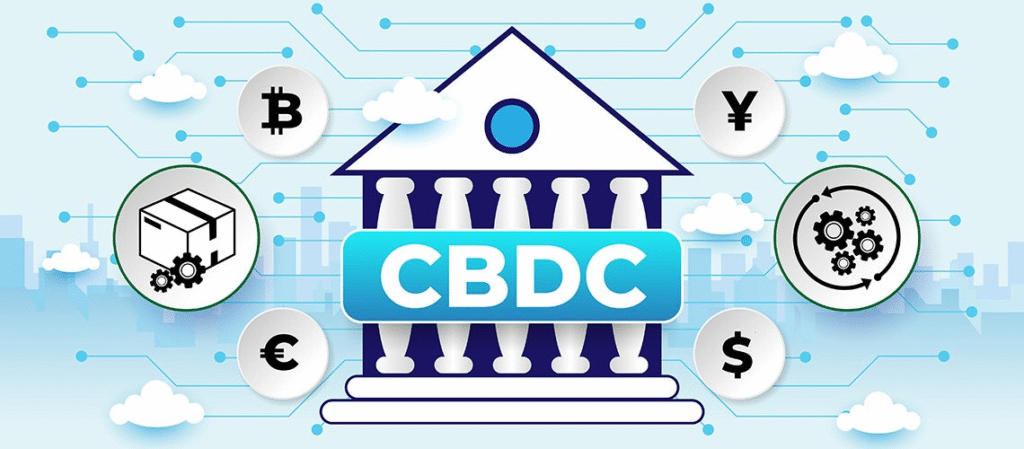
Digital currencies are viewed as a means of central banks to make payment systems modern. The need of fast and cheap digital transactions is increasing in many countries. CBDCs can assist to do so and maintain money supply and financial security in governmental control.
The Bank for International Settlement (BIS) said that more than 60 percent of central banks are conducting experiments or pilot projects on CBDCs. To illustrate, in China, the digital yuan has already reached a user base of 260m and in the Bahamas the Sand Dollar is the first national digital currency released in 2020.
CBDCs also provide an opportunity to access individuals without bank accounts. According to the World Bank, almost one point four billion adults in the world are the unbanked. With proper development, digital currencies can make them access digital payments over smartphones, without having to have a traditional bank account.
Key Concerns and Practical Problems
CBDCs sound useful although they raise serious questions. The issue of privacy concerns a lot of people. A decentralized currency run by a central bank would help trace all transactions, and easily monitoring spending habits can be made easy by the authorities. This is one of the primary concerns that are causing some nations to move at a slow pace such as the United States.
Cybersecurity is also feared. Once hackers get access to the system of a central bank, millions of people can be under the influence of the damage. Digital money systems are a big target since cybercrime may cost the world $10.5 trillion a year by 2025.
Conversely, banks fear that CBDCs would decrease its role. In the case where individuals are capable of having digital currency in the hands of the central bank, commercial banks risk losing deposits and hence find it difficult to lend funds.
FAQs
1. What is the main difference between CBDCs and cryptocurrencies?
CBDCs are controlled by central banks and have a fixed value equal to the national currency, while cryptocurrencies are decentralized and their value changes with the market.
2. Are CBDCs safe to use?
CBDCs can be safe if central banks use strong cybersecurity systems and strict data protection rules. However, no digital system is 100% risk-free.
3. How can CBDCs help people without bank accounts?
CBDCs can let people use digital payments through their phones, giving them access to money transfers and savings without needing a bank.
4. Which countries are leading in CBDC development?
China, Nigeria, the Bahamas, and Jamaica are among the first to launch CBDCs, while the European Union and India are testing their versions.
5. Will CBDCs replace paper cash completely?
Not soon. Most countries plan to keep both cash and digital money for now, allowing people to choose how they want to pay.


